
Difference between monohull and catamaran
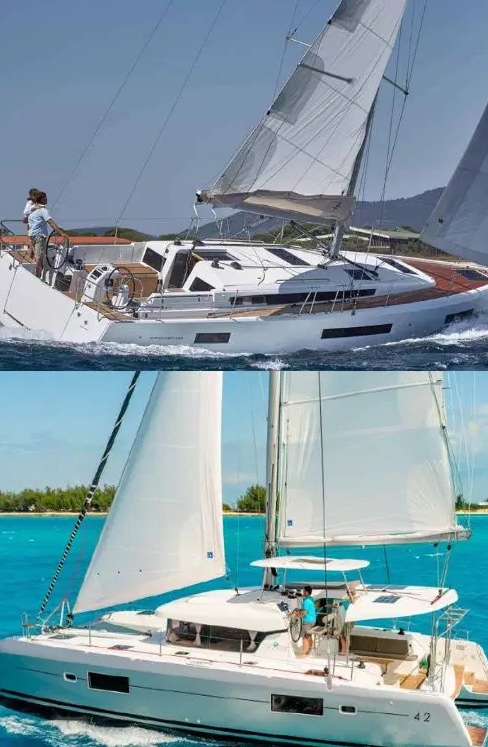
The choice between a monohull and a catamaran is a significant one when it comes to sailing, as both types of boats have distinct advantages and characteristics. Here's a breakdown of the main differences between monohulls and catamarans, covering aspects like performance, comfort, handling, and cost:
1. Hull Design
-
Monohull:
-
Single Hull: A monohull has one single hull and a traditional, sleek shape.
-
Narrower Beam: It generally has a narrower beam (width) compared to a catamaran.
-
Deep Draft: The hull typically has a deeper draft (how far the boat extends below the water), which helps provide stability while sailing.
-
Keel and Rudder: Monohulls rely on a keel for stability and resistance to side forces, and they usually have a single rudder for steering.
-
-
Catamaran:
-
Two Hulls: A catamaran has two hulls, which are parallel to each other and connected by a central platform or deck.
-
Wider Beam: It has a much wider beam, making the boat more stable and giving it a greater sense of space.
-
Shallow Draft: Catamarans have a shallower draft, which allows them to navigate in shallow waters more easily.
-
Twin Rudders: Most catamarans have two rudders, one on each hull, providing increased maneuverability.
-
2. Stability and Comfort
-
Monohull:
-
Heel (Tilting): Monohulls tend to heel (tilt) when sailing, especially in strong winds. While this is normal for traditional sailing, some sailors find the heeling uncomfortable, especially if it is severe.
-
Less Living Space: Monohulls generally have less deck and interior space due to the narrower hull. While comfortable, they offer less living space compared to a catamaran.
-
Motion: The heeling of a monohull can sometimes lead to more rolling and motion sickness for passengers who are sensitive to the movement of the boat.
-
-
Catamaran:
-
More Stable: With two hulls, catamarans are much more stable on the water. They don’t heel much, if at all, and instead, they tend to stay level even in rough conditions.
-
More Spacious: The wider beam of a catamaran allows for much more interior and exterior space. There are often multiple levels (a lower hull and upper deck), providing ample room for lounging, dining, and relaxation.
-
Smooth Ride: Because of the increased stability, catamarans tend to offer a smoother ride, with less roll, making them more comfortable for many passengers.
-
3. Performance
-
Monohull:
-
Traditional Sailing Performance: Monohulls are more responsive to the helm, and their performance is often considered more traditional. They're great for heavier winds and are built for high performanceunder tough conditions.
-
Sailing Angle: Monohulls are known for their ability to sail at a closer angle to the wind (better upwind performance) compared to catamarans.
-
Tacking and Turning: A monohull requires tacking when turning into the wind, which is a skill that can take some time to master.
-
-
Catamaran:
-
Faster and More Efficient in Light Winds: Catamarans tend to perform better in light winds due to their wider beam and larger sail area relative to their size.
-
Sailing Performance: While they may not be as good as monohulls at sailing close to the wind (upwind), they are typically faster in downwind sailing and offshore passages, due to their lighter weight and dual-hull configuration.
-
Maneuverability: Catamarans are easier to handle when it comes to turning and docking, thanks to their twin rudders and greater stability.
-
4. Cost
-
Monohull:
-
Lower Purchase Price: Generally, monohulls are less expensive to purchase, both in terms of the initial costand the maintenance (since there's only one hull and fewer components).
-
Fuel Costs: Monohulls typically use less fuel because they’re lighter and more efficient under motoring conditions, especially if sailing conditions are not ideal.
-
Storage Fees: Monohulls are usually cheaper to store at marinas or boatyards.
-
-
Catamaran:
-
Higher Purchase Price: Catamarans are generally more expensive to purchase due to their dual-hull design, larger structure, and higher production costs.
-
More Expensive Maintenance: Maintenance costs can be higher because of the complexity of having two hulls, two engines, and additional equipment like sails, rigging, and propulsion systems.
-
Higher Storage Fees: Due to their wider beam, catamarans usually have higher storage fees at marinas or boatyards, as they take up more space.
-
5. Ease of Handling
-
Monohull:
-
Less Space for Crew: Handling a monohull, especially in rough conditions, can require a bit more experience, particularly when it comes to managing the tacking and heeling.
-
Skill Requirements: Monohulls often require a bit more technical knowledge to handle well, especially when docking or maneuvering in tight spaces.
-
-
Catamaran:
-
Easier to Maneuver: Catamarans are generally easier to handle in terms of maneuverability. With two engines and a wider beam, catamarans are great for docking and low-speed maneuvers.
-
More Accessible for Less Experienced Sailors: The stability and ease of handling make catamarans a good choice for less experienced sailors or those who want a more relaxed sailing experience.
-
Summary Comparison
| Aspect | Monohull | Catamaran |
|---|---|---|
| Hull Design | Single hull, narrow beam, deeper draft | Two hulls, wider beam, shallow draft |
| Stability | Heels in wind, less stable in rough seas | Very stable, little to no heeling |
| Comfort | Less spacious, more movement (rolling) | Very spacious, smooth and stable ride |
| Performance | Better upwind performance, great in high winds | Faster in light winds, smoother downwind sailing |
| Cost | Cheaper to buy, maintain, and store | More expensive to buy, maintain, and store |
| Handling | Requires more skill, more effort in rough seas | Easier to handle, especially for docking |
Which One Should You Choose?
-
Monohulls are ideal if you enjoy traditional sailing, want to challenge your skills, and prefer a more authentic sailing experience with a focus on performance.
-
Catamarans are perfect for those seeking stability, comfort, and more space for living or entertaining. They are especially good for families, those new to sailing, or those who want a more relaxed cruising experience.
Ultimately, the choice depends on your personal preferences, sailing experience, and what kind of experience you want while cruising.